山东风途物联网科技有限公司
联系人:薛经理
联系电话:15689257565
QQ:1379335561
公司地址:山东省潍坊市高新区光电路155号光电产业加速器(一期)


PRODUCT
联系人:薛经理
联系电话:15689257565
QQ:1379335561
公司地址:山东省潍坊市高新区光电路155号光电产业加速器(一期)
更新时间:2026-11-05 文章来源:校园气象站
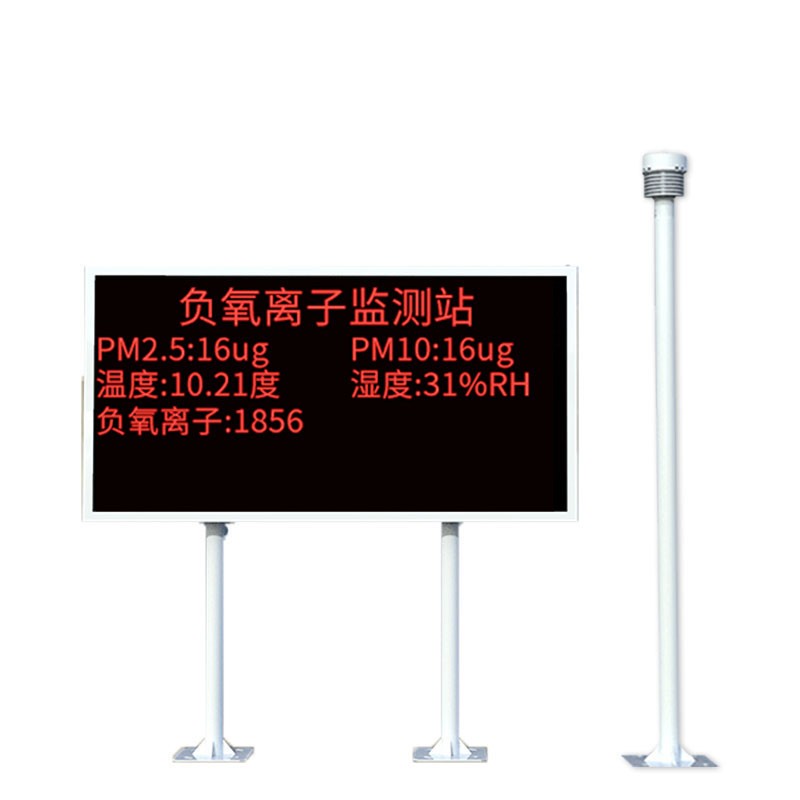
Ecological monitoring stations in scenic areas are automated environmental monitoring systems installed within tourist destinations, designed primarily to collect and display air quality and meteorological data in real time. These stations typically focus on negative oxygen ion concentrations as a key metric, while also integrating sensors for temperature, humidity, PM2.5, and PM10, providing a continuous record of data for ecological management.
In practice, such systems have already been deployed in Hubei Province—specifically at the Baizhao Mountain Scenic Area, the Ginkgo Valley Scenic Area, and Taibai Lake Park. These stations offer 24/7 automated observation, with collected data displayed on outdoor LED screens, allowing visitors to view real-time negative oxygen ion levels and current meteorological conditions. Similarly, the Shizhu Mountain Scenic Area in Fuqing, Fujian, utilizes both negative oxygen ion monitors and regional automated weather stations to present real-time data on electronic displays for the benefit of both visitors and scenic area management. These examples illustrate that the core function of these monitoring stations is to transform invisible air quality indicators into readable, digital information.
In terms of hardware, these ecological monitoring stations feature a modular design, allowing individual sensors to be replaced without the need to dismantle the entire unit. Negative oxygen ion measurement typically employs a cylindrical electrode aspiration method, with a range of 0 to 100,000 ions per cubic centimeter, a resolution of 1 ion per cubic centimeter, and an accuracy within ±10%. PM2.5 and PM10 sensors operate on the principle of light scattering; temperature is measured using the diode junction voltage method, and humidity is tracked via a capacitive sensor. The units come with professional mounting brackets and offer flexible power options, including 220V mains electricity or solar power. Data transmission is supported via 4G or fiber optics, enabling real-time access through on-site LED screens, remote cloud platforms, web interfaces, and WeChat official accounts.
For the operation of scenic areas, the value of these monitoring stations lies in the continuity of their data output. While visitors can access immediate environmental information via on-site screens, managers can utilize cloud platforms to retrieve historical data trends—analyzing how air quality shifts across different seasons, times of day, or varying levels of visitor density. Some scenic areas have integrated monitoring data with their wellness tourism branding, leveraging negative oxygen ion metrics to bolster the promotion of eco-tourism. The equipment itself does not perform any intrusive operations; it functions solely to collect and display data. Consequently, maintenance efforts focus primarily on keeping sensors clean and ensuring they undergo regular calibration. In locations such as forest parks, wetland parks, and areas featuring waterfalls—characterized by dense vegetation or abundant water bodies—these monitoring stations operate reliably, providing environmental data that serves as a valuable reference.